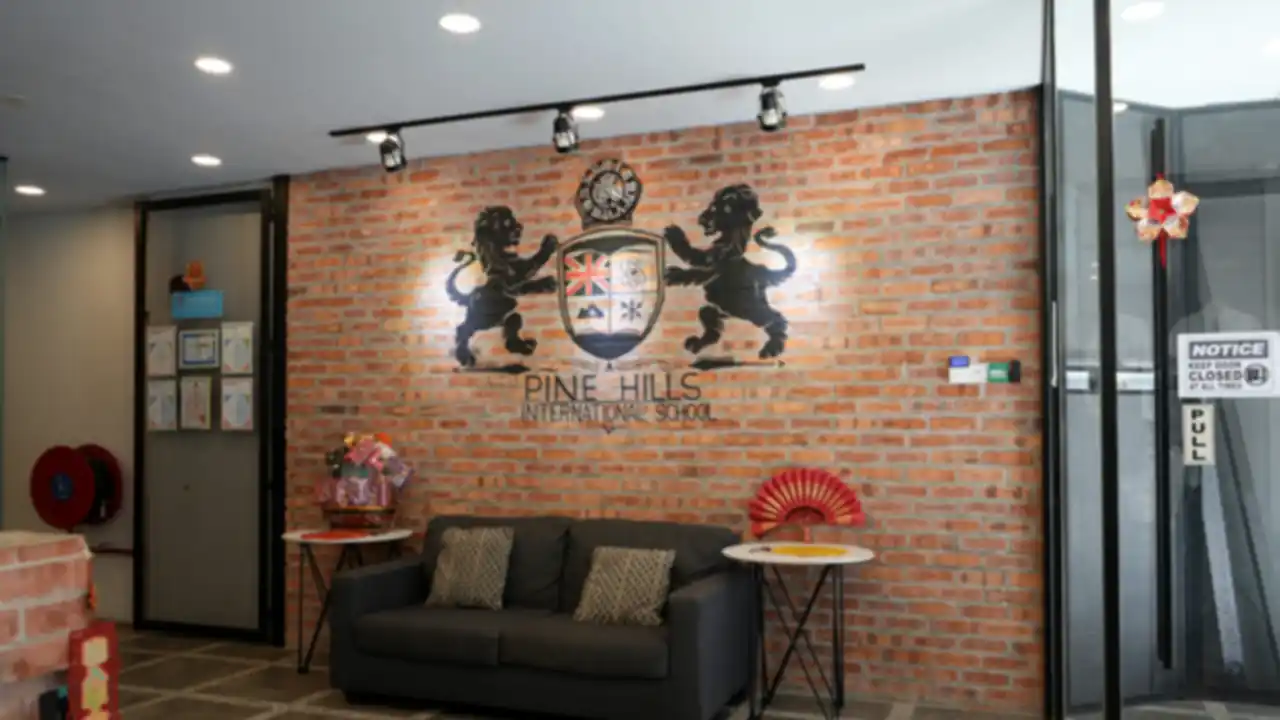

In Malaysia both are privately run schools registered with the Ministry of Education; the difference is the curriculum. An international school teaches a foreign curriculum, such as Cambridge, in English. An academic private school (sekolah swasta) follows Malaysia's national curriculum, KSSR in primary and KSSM in secondary, which leads to the SPM exam at the end of Form 5.
Key takeaways
- Malaysia's government portal lists international schools as one kind of private school; the other common kind, the academic private school (sekolah swasta), follows the national curriculum.
- International schools teach a foreign curriculum, such as Cambridge, in English; academic private schools follow KSSR and KSSM, which lead to the SPM at the end of Form 5.
- Malaysia's Form Six and Matriculation routes ask for the SPM, so a Malaysian child on the Cambridge route should check early which results their next step accepts.
- Both kinds can enrol foreign children; the Ministry of Education's SMIPS list shows registered private schools.
- On 20 January 2026 the government announced Bahasa Melayu and History will be compulsory at international schools; in February 2026 the ministries said they were reviewing how to apply it.
- Pine Hills runs both: Cambridge international campuses in Kuala Lumpur, Subang Jaya and Shah Alam, and Sri Pine Hills Private School in Cheras (Cambridge IGCSE with KSSR and KSSM).
Parents looking for a school in Kuala Lumpur or Selangor soon meet two labels that sound alike: international school and private school. Both are privately run, so the useful questions are what your child will study, in which language, which exam it leads to and what comes after. This guide sets out what Malaysia's own rules say, then how to choose.
Is an international school a type of private school in Malaysia?
Yes. Malaysia's official government portal lists international schools as one of several kinds of private educational institution, which operate "without government funding". The other common kind is the academic private school (sekolah swasta), which follows the national curriculum. Both are registered with the Ministry of Education.
Malaysia's trade ministry, MITI, gives this definition in its guide for international school operators, naming the Ministry of Education as the regulator and the Education Act 1996 (Act 550) as the law:
"An International School is a private school which offers pre-school, primary and secondary school education using an International Curriculum."
The government portal sorts private schools into these types:
- Academic private schools follow the national curriculum: KSSR (the Primary School Standard Curriculum) and KSSM (the Secondary School Standard Curriculum).
- International schools teach a foreign curriculum in English; the portal's approved curricula include the British, American, Australian and Canadian ones.
- Expatriate schools use the curriculum and language of their home country, for that community.
- Religious private schools follow the national curriculum with programmes from the state religious authorities.
- Special education schools follow the national curriculum for special education.
- Chinese private secondary schools work towards the Unified Examination Certificate (UEC).
In Malaysia, the difference between an international school and an academic private school is not who runs it or who pays for it, but which curriculum it teaches.
How do the curriculum, language and exams compare?
An international school teaches a foreign curriculum in English and leads to that curriculum's exams, such as the Cambridge IGCSE. An academic private school teaches the national curriculum, KSSR and then KSSM, which leads to the SPM (Malaysian Certificate of Education) at the end of Form 5. Starting ages are counted differently: a Cambridge Year 1 child is 5 when the school year starts and turns 6 during it, while a national Year One child turns 7 during the school year (or 6, from 2027, if parents choose early entry), so the real gap is about one year.
| What to compare | International school | Academic private school (sekolah swasta) |
|---|---|---|
| Curriculum | A foreign curriculum approved for Malaysia, for example the British (Cambridge) curriculum | The national curriculum: KSSR in primary, KSSM in secondary |
| Language of teaching | English | Varies by school, so ask (government national schools teach mainly in Malay) |
| Primary starts | Cambridge Primary from age 5 | Year One at 7; from 2027 parents may choose 6 or 7 |
| Secondary stages | Cambridge Lower Secondary from age 11, Upper Secondary from 14 | Forms 1 to 3 (ages 13 to 15), Forms 4 and 5 (ages 16 to 17) |
| Main exam at the end of secondary | The curriculum's own, such as the Cambridge IGCSE | The SPM, at the end of Form 5 |
| National routes after secondary | Form Six and Matriculation ask for the SPM; international pre-university programmes take SPM leavers "or equivalent" | Form Six (STPM), the Ministry's Matriculation Programme and other routes after the SPM |
Each system states its ages its own way, so check the entry cut-off date with the school you choose. The Cambridge IGCSE and the SPM both come at the end of secondary school, but they belong to different systems: the IGCSE to Cambridge International, the SPM to Malaysia's national curriculum. At Pine Hills the Cambridge journey runs from Little Pine Hills preschool (ages 4 to 5) through Primary (5 to 11) and Lower Secondary (11 to 14) to two years of Upper Secondary (14 to 16) and the Cambridge IGCSE at the end of Year 11; our curriculum page walks through each stage.
Where does each route lead after secondary school?
The SPM opens Malaysia's own pre-university routes. On the government portal, Form Six (the STPM) asks for an SPM pass "with at least a credit in Bahasa Melayu", and the Ministry's Matriculation Programme is for Malaysian citizens who are current SPM candidates. International pre-university programmes are open to "SPM leavers (or equivalent)".
For a Malaysian child on the Cambridge route, this means asking two things early: which IGCSE results the colleges you have in mind accept, and whether the school offers a way to sit the SPM as well. International schools said in early 2026 that "SPM examination pathways are already in place" so that their students can go on to public universities, Malay Mail reported.
Who can enrol in an international school or a private school?
Malaysian and foreign children can enrol in both. The Immigration Department of Malaysia grants a Student Pass to non-citizen students aged three and above, and its school category covers international schools, expatriate schools and private schools approved by the Ministry of Education's Private Education Division. An international school also needs the Home Ministry's authorisation to take international students.
More Malaysian families are choosing international schools. Enrolment of local children in international schools rose 18.2% in 2024, from 57,363 to 67,821, according to Department of Statistics Malaysia figures reported by The Star. The mix of Malaysian and foreign pupils differs from school to school, so ask about a school's own community on a tour.
Pine Hills helps its enrolled students with the visa application, runs a support group with language support for foreign students, and offers IELTS classes; our guide to applying for a student visa in Malaysia sets out the steps.
What changed in 2026 for international schools?
Bahasa Melayu and History are set to become compulsory at international schools under a policy announced on 20 January 2026, at the launch of the National Education Blueprint 2026–2035. Prime Minister Anwar Ibrahim said "Bahasa Melayu and History will be made compulsory for international schools", Bernama reported. The Education Ministry has since discussed students in non-national curriculum schools sitting both subjects at SPM level.
On 9 February 2026 the Education and Higher Education ministries said they were reviewing how to put the policy in place, focusing on assessment, examinations and quality monitoring, particularly for international schools. The same Blueprint launch also changed starting ages: in 2027, "parents may choose for their children to enter Year One at either six or seven years old", Malay Mail reported, with preschool from five.
For a Malaysian family, the question to ask any international school is: "Will my child sit the SPM Bahasa Melayu and History papers here, and how are you preparing?" Academic private schools already teach the national curriculum, and the national primary curriculum (KSSR) includes Malay and, from Standard 4, History. In Pine Hills' Cambridge programme, Malay Language is taught in Primary and Lower Secondary, and Malay as a Foreign Language is compulsory for Malaysian students in Upper Secondary; ask us how we are preparing for the new policy.
How can I check that a school is registered?
Look the school up on the Ministry of Education's own list. The Ministry's Private Education Division publishes a searchable school list on its SMIPS portal, which can be filtered by state, by school type, such as international school (sekolah antarabangsa), and by name. Private educational institutions, international or not, are registered with the Ministry, so a registered school should appear there.
You can also ask to see the school's current registration certificate on a tour. For a child who is not Malaysian, ask an international school for its Home Ministry approval to take international students as well.
Which suits my child: an international school or a private school?
Neither kind is better in itself. An international school suits a family that wants an English-medium foreign curriculum such as Cambridge, or may move between countries. An academic private school suits a family that wants the national curriculum and the SPM in a privately run school. Some private schools join the two: Sri Pine Hills in Cheras combines the Cambridge IGCSE curriculum with KSSR and KSSM. These six questions usually settle it:
- Where might your child study after school? Malaysia's Form Six and Matriculation routes ask for the SPM; colleges and international pre-university programmes set their own entry rules, so ask them which results they accept.
- Might your family move country? Cambridge International says its community is made up of over 10,000 Cambridge schools and that it operates in 160 countries, so the same Cambridge stages are taught far beyond Malaysia.
- Which language does your child learn best in? International schools teach in English. Pine Hills' ESL programme (Beginner, 100 hours; Intermediate, 120 hours) helps children who are new to learning in English, and can start remotely before a family arrives.
- Does your child need extra support? Ask every school how it supports children with special needs. At our Gifted Kids Care Centre, Pine Hills runs specialised classes for autistic children and an Early Intervention Programme.
- What will it cost? A school's label does not tell you what it costs, so ask each school for its current fees before you compare.
- Which campus is close to home? A school run is part of every day, so compare the campuses near you.
Our earlier article on how to choose an international school in Malaysia covers the other things families weigh, and the guides for parents answer more questions like these.
Does Pine Hills run an international school and a private school?
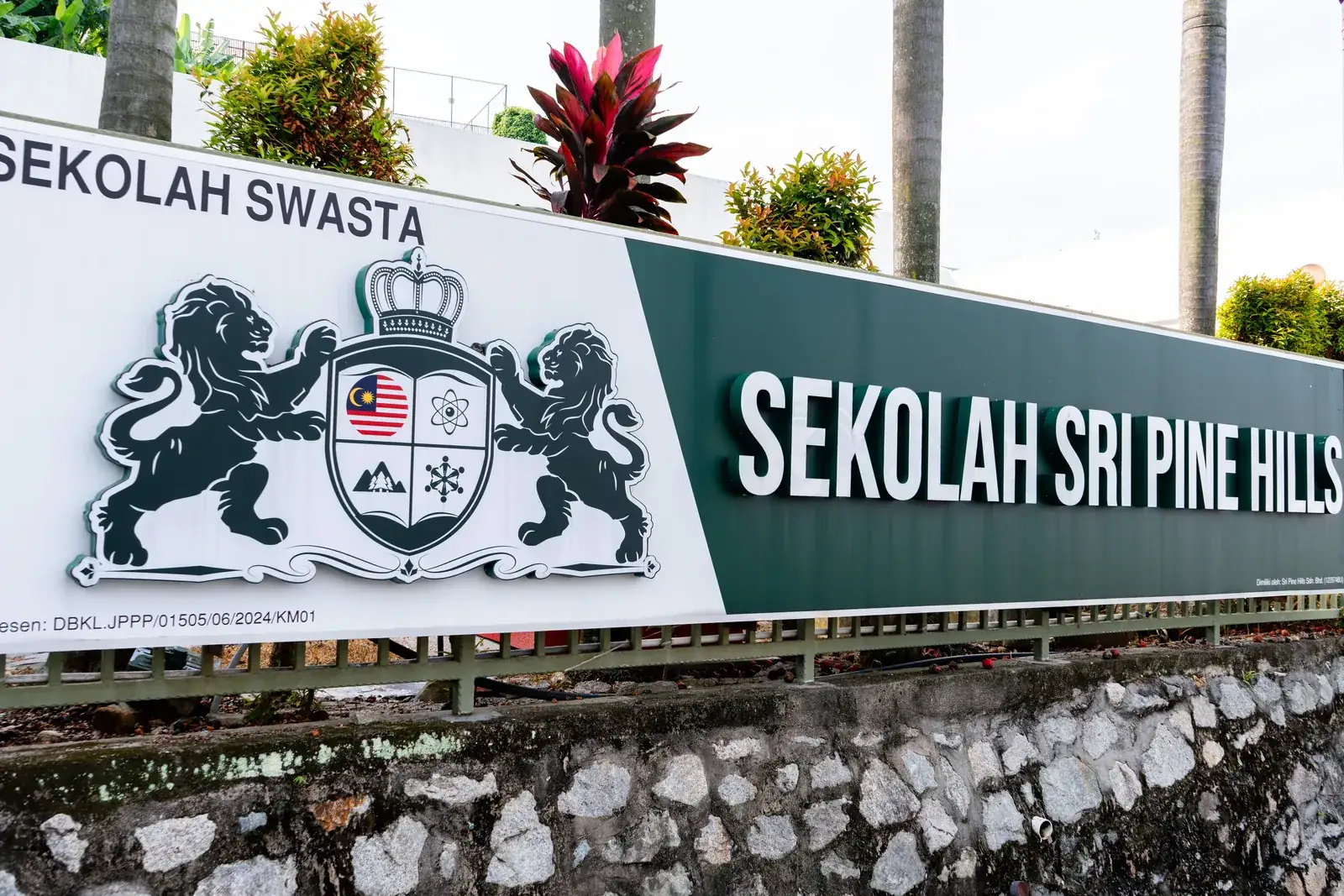
Yes. Pine Hills International School, a Cambridge International School, has campuses in Kuala Lumpur (Jalan Puchong), Subang Jaya and Shah Alam. Sri Pine Hills Private School in Cheras, opened in 2023, combines the Cambridge IGCSE curriculum with Malaysia's KSSR for primary and KSSM for secondary. Its sign wall reads "Sekolah Swasta", Malay for private school.
So a family can compare a Cambridge international school and a private school that joins Cambridge with the national curriculum within one school group. The clearest way to feel the difference is to see both: book a school tour of Sri Pine Hills in Cheras and one of our Cambridge campuses, and ask the questions above at each. Our campuses page has every address, and the admissions page explains how to join.
Frequently asked questions
Is an international school the same as a private school in Malaysia?
Not quite. Under Malaysian rules an international school is one kind of private school: one that teaches a foreign curriculum in English. The other common kind, the academic private school (sekolah swasta), follows the national curriculum, KSSR and KSSM, towards the SPM.
Can Malaysian children go to an international school?
Yes. Enrolment of local children in international schools rose 18.2% in 2024, to 67,821 (Department of Statistics Malaysia figures reported by The Star). Under a policy announced in January 2026, Bahasa Melayu and History are to be compulsory at international schools, so ask each school whether your child will sit those SPM papers.
Do private schools in Malaysia prepare students for the SPM?
Academic private schools follow KSSM in secondary, the national curriculum that leads to the SPM at the end of Form 5. Some private schools also teach the Cambridge IGCSE, so ask a school which exams its students sit.
At what age does a child start primary school in Malaysia?
Cambridge Primary starts at age 5. In the national system Year One starts at 7, and from 2027 parents may choose for their child to start Year One at 6 or 7. Each system counts age its own way, so check the cut-off date with the school.
Does Pine Hills have a private school as well as international campuses?
Yes. Sri Pine Hills Private School in Cheras (2 Jalan Jering, Taman Cheras) combines the Cambridge IGCSE curriculum with KSSR and KSSM. The Kuala Lumpur, Subang Jaya and Shah Alam campuses are Pine Hills International School, a Cambridge International School.
Sources
- Official Malaysia Government Website: Private Secondary Schools (updated 16 March 2026)
- Official Malaysia Government Website: Private Educational Institutions, primary (updated 16 March 2026)
- Official Malaysia Government Website: Primary Education in Malaysia
- Official Malaysia Government Website: Secondary Education in Malaysia (updated 16 March 2026)
- Official Malaysia Government Website: Form Six (updated 16 March 2026)
- Official Malaysia Government Website: Matriculation Programme (MOE) (updated 16 March 2026)
- Official Malaysia Government Website: International Pre-University Programmes (updated 16 March 2026)
- Official Malaysia Government Website: Registration for Establishing a Private Educational Institution (Ministry of Education)
- Ministry of Education, Private Education Division: SMIPS school list (Senarai Sekolah)
- Immigration Department of Malaysia: Student Pass
- MITI: International Schools (guide for operators, 2013)
- Cambridge International: Programmes and qualifications (the Cambridge Pathway by age)
- Cambridge International: About us (over 10,000 Cambridge schools, 160 countries)
- Bernama: BM, History now compulsory subjects at international, religious, UEC schools - PM Anwar (20 January 2026)
- Malay Mail: Malaysia lowers preschool entry to five, Standard One to six from 2027 (20 January 2026)
- Malay Mail: Education, Higher Education Ministries to review Bahasa Melayu and history subjects rollout (9 February 2026)
- Asia News Network / The Star: More parents in Malaysia opting for international schools (25 November 2025, DOSM figures)