
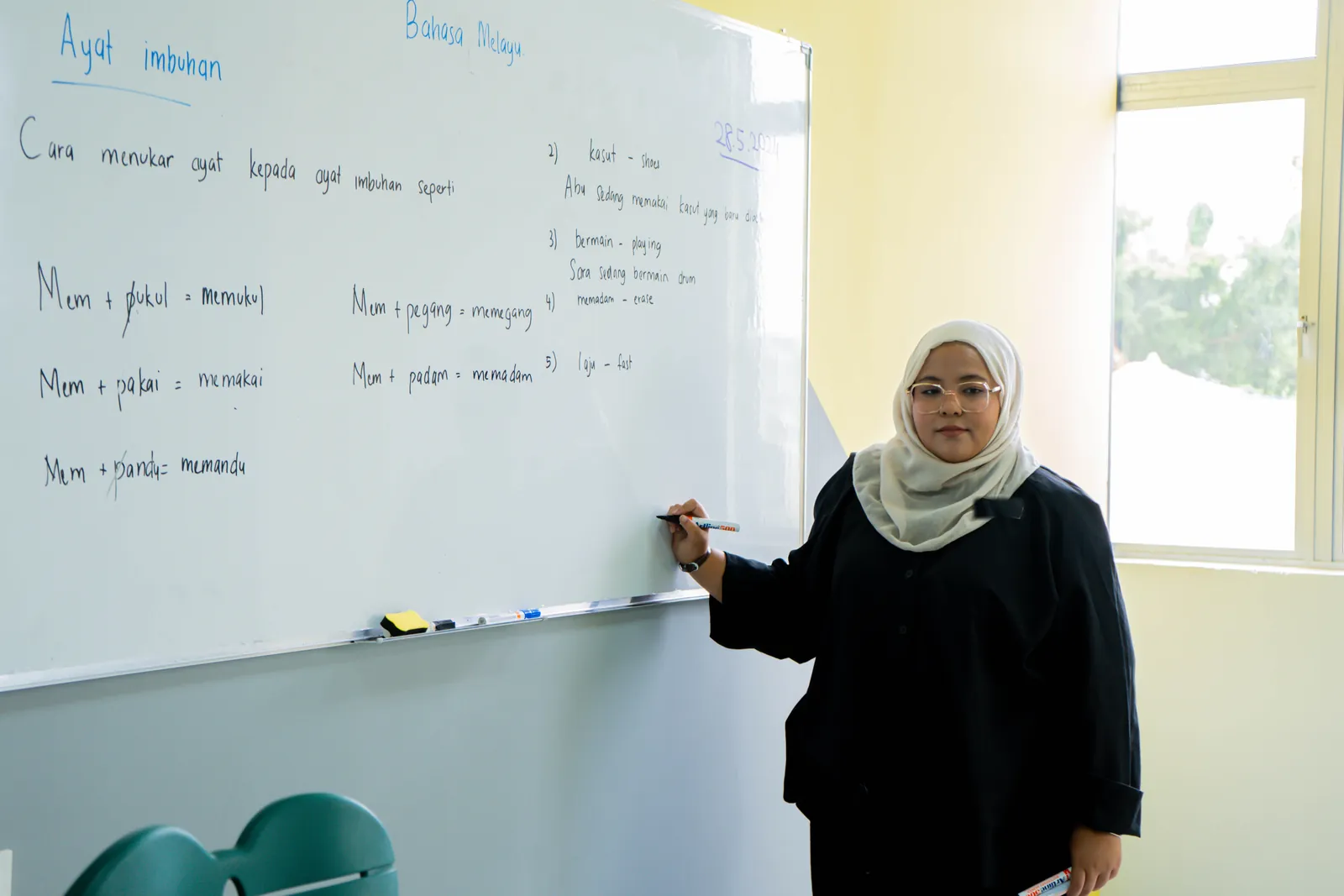
Neither exam suits every child: choose by where your child goes next. SPM, Malaysia's Form 5 exam, is what public universities, Form Six and matriculation are built on. The Cambridge IGCSE, usually taken from 14 to 16, offers over 70 subjects and is recognised abroad. A Malaysian IGCSE student who wants a public university place still needs SPM papers, starting with Bahasa Melayu and Sejarah.
Key takeaways
- SPM is Malaysia's national exam at the end of Form 5, when students are 16 to 17; the Cambridge IGCSE is usually taken from 14 to 16, so an IGCSE student typically finishes secondary school about a year younger.
- Public universities read SPM grades: for 2026/2027 a foundation (Asasi) place through UPU needed five SPM credits including Bahasa Melayu and a pass in Sejarah, and only Malaysian citizens can apply.
- Since May 2026, international school graduates may apply for selected public university courses if they pass SPM Bahasa Melayu and History.
- An IGCSE student can sit SPM as a private candidate, but a first sitting means six core subjects, not two; the 2026 exam charges for them came to RM94.50 or RM96.00.
- For a private university or college, families apply directly, and MQA's entry list for international students places the Cambridge IGCSE at foundation, certificate or diploma level.
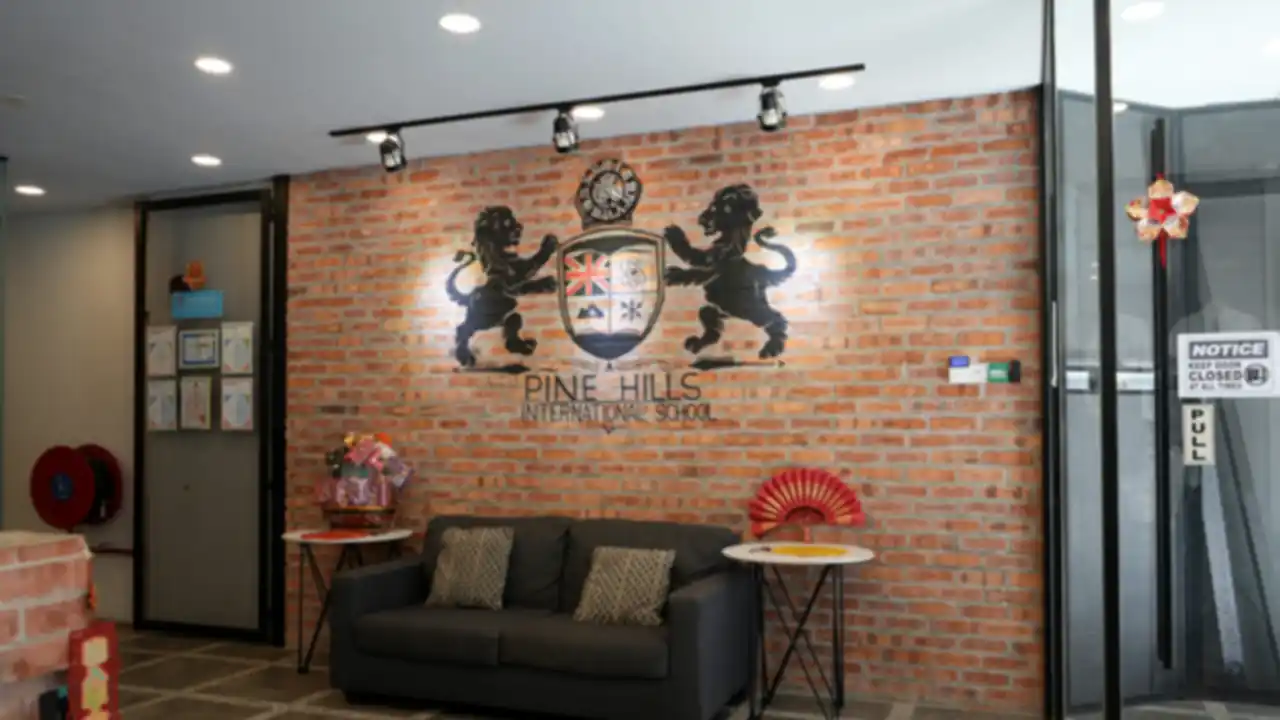
- At Pine Hills, Upper Secondary (ages 14 to 16) leads to the Cambridge IGCSE at the end of Year 11, and Malaysian students take Malay as a Foreign Language as a compulsory subject.
Many Malaysian families face this choice when a child is about 12 to 14: stay on (or move to) the national route that ends with the Sijil Pelajaran Malaysia (SPM), or take the Cambridge IGCSE, the international exam that Pine Hills International School's secondary years lead to. Both are recognised school-leaving qualifications, and they open different doors. This guide compares them from the exam boards' own rules, the public university entry circulars for 2026/2027, the Examinations Board's 2026 registration notice and ministers' statements, then works through the costs, the mistakes and the cases where the usual advice does not apply. More answers are on our guides for parents page.
What are the IGCSE and SPM?
The Cambridge IGCSE is an international qualification from Cambridge University Press & Assessment, usually taken from age 14 to 16. SPM (Sijil Pelajaran Malaysia, the Malaysian Certificate of Education) is Malaysia's national examination at the end of Form 5, set by the Examinations Board (Lembaga Peperiksaan) of the Ministry of Education. Both close secondary school, and both lead on to a pre-university step rather than straight into a degree.
Cambridge calls the IGCSE "the world's most popular international qualification for 14 to 16 year olds". According to Cambridge's guide for parents, the Cambridge IGCSE is taught by over 6,000 schools in over 150 countries and offers over 70 subjects, including 30 languages. SPM is the national exam at the end of Form 5: the Examinations Board's 2026 registration notice lists 95 SPM subjects across 182 papers, and The Star reported that 413,299 candidates sat SPM 2025 at 3,350 centres.
The ages differ by about a year. The government's education portal puts Upper Secondary (Form 4 to Form 5) students at 16 to 17, with SPM as the main examination. At Pine Hills, Upper Secondary runs from 14 to 16 and ends with the IGCSE at the end of Year 11, which is why an IGCSE student usually reaches the next step younger than a national-school classmate.
Neither exam is a university place on its own. After SPM come Form Six (STPM), the Ministry of Education's matriculation programme, a foundation (Asasi) or a diploma. After the IGCSE comes a post-16 course, which the section on private universities below explains step by step.
What is the difference between IGCSE and SPM?
The main difference is who sets each exam and what it is built for. Cambridge sets the IGCSE, lets a school build a subject mix from over 70 subjects and grades each subject from A* to G. Lembaga Peperiksaan sets SPM around a fixed core of subjects for every first-time candidate, grades from A+ to G, and builds it around Malaysia's public higher education.
Two rules make SPM different in kind, not only in content. A pass in Bahasa Melayu and Sejarah is a condition of the SPM certificate itself: in June 2023 Education Minister Fadhlina Sidek confirmed that the two subjects remain its pass requirement, Berita RTM reported. And every public university minimum is written in SPM credits. The IGCSE is built to travel instead: Cambridge says "leading universities and employers worldwide accept Cambridge IGCSE as evidence of academic ability".
| Point | Cambridge IGCSE | SPM |
|---|---|---|
| Set by | Cambridge University Press & Assessment | Lembaga Peperiksaan, Ministry of Education Malaysia |
| Usual age | 14 to 16; at Pine Hills, at the end of Year 11 | End of Form 5; Form 4 and 5 students are 16 to 17 |
| Subjects | Over 70, including 30 languages; each school decides which it offers | 95 subjects; six core subjects for every first-time candidate |
| Bahasa Melayu | Optional; Cambridge's IGCSE Malay syllabus (0546) is "designed for students who are learning Malay as a foreign language" | Compulsory; a pass is needed for the certificate, and a credit for an Asasi or public university diploma place and for Form Six |
| How it is assessed | At the end of the course, through written, oral, coursework and practical options | Written papers, plus speaking and listening tests in Bahasa Melayu and English and practical tests in the sciences |
| Grades | A* (highest) to G | Ten grades: A+, A, A-, B+, B, C+, C, D, E, G; a credit is grade C or better |
| Exam charges | Ask the school what its IGCSE entries cost and whether its charges cover them | For a private candidate in 2026: RM20.00 basic charge plus RM10.50 to RM20.50 a subject |
| Public university through UPU | Selected courses (announced May 2026) with passes in SPM Bahasa Melayu and History; every other UPU route asks for SPM credits | The baseline: every UPU minimum is written in SPM credits |
| Form Six and matriculation | Not open on the IGCSE alone: both are written for SPM candidates | Form Six: an SPM pass with at least a credit in Bahasa Melayu; matriculation: current SPM candidates |
| Private universities and colleges | Apply directly; MQA's entry list for international students places the IGCSE at foundation, certificate or diploma level | Apply directly to the institution, outside UPU |
| Abroad | Accepted in the UK as equivalent to the GCSE (Cambridge) | Each foreign university sets its own view: ask the one your child is aiming for |
A grade C is not the same thing on both sides of this table. "Credit" is an SPM term: The Star's report of the SPM 2025 results defines it as grade C or better, and it found that 23.76% of candidates, 92,347 students, secured at least a credit in every subject. UPU's 2026/2027 circular for SPM leavers is written entirely in SPM grades and does not mention the IGCSE, so an IGCSE grade, however good, does not count towards the credits that circular asks for.
Is IGCSE equivalent to SPM in Malaysia?
Not for public university entry. UPU's 2026/2027 circular for SPM leavers counts only SPM grades and never mentions the IGCSE, and the 2026 decisions ask Malaysian international school students for SPM Bahasa Melayu and History. Outside UPU the IGCSE is recognised: Malaysia's qualifications agency, MQA, lists the Cambridge IGCSE as an entry qualification for foundation, certificate or diploma study, on its list for international students.
None of the rules this guide draws on converts IGCSE grades into SPM grades, so the useful question is what each door asks for. Inside UPU the answer is plainly no: the worked example below shows an IGCSE-only student meeting none of its minimums, however good the IGCSE grades.
Outside UPU, MQA's list of entry qualifications for international students places the International General Certificate of Secondary Education, from Cambridge and other UK awarding bodies, at entry to "Foundation, Level 3 MQF (Certificate) or Level 4 MQF (Diploma)". The list sets no minimum grade or number of subjects, so the exact course decides those. Abroad, Cambridge says the IGCSE is accepted in the UK as equivalent to the GCSE.
Which one do Malaysian public universities ask for?
Malaysian public universities ask school leavers for SPM. UPU (UPUOnline), the Ministry of Higher Education's central application system, set the 2026/2027 rules in its entry circular: a public university foundation (Asasi) place needs at least five SPM credits, including Bahasa Melayu, and a pass in Sejarah; a public university diploma needs three credits, including Bahasa Melayu, and a pass in Sejarah.
A polytechnic or community college diploma needs three credits and a pass in both Bahasa Melayu and Sejarah. Only Malaysian citizens with a MyKad can apply through UPU, and in 2026 SPM leavers applied in a single window, from 29 January to 12 April, according to UPU's own questions-and-answers page. The circular also reserves some programmes, such as Asasi Sains UM and every UiTM programme, for applicants of Malay descent, Anak Negeri of Sabah and Sarawak and Orang Asli of Peninsular Malaysia, while it lists others, such as ASASIpintar UKM and Diploma Politeknik, as open to all qualified applicants.
Meeting the minimum is the start of the race, not a place. UPU ranks applicants on merit: 90% academic marks from SPM grades (an A+ is worth 18 points, an A 16, down to 0 for a G) and 10% co-curricular marks, which the Ministry of Education supplies for school candidates. Higher Education Minister Zambry Abd Kadir put the principle plainly in May 2026, as The Vibes reported:
"…the basis for entry into UPU remains SPM."
The same report says the minister rejected calls to change the public university admission framework, and quotes him: "As long as I am the minister, I will not allow education without the foundation of SPM."
Two other public routes also start from SPM. Form Six asks for an SPM pass with at least a credit in Bahasa Melayu, for students aged 17 to 20 on 1 January, and the government portal describes the STPM it leads to as a pre-university qualification "recognised domestically and internationally". The Ministry of Education's matriculation programme, with free tuition and accommodation, is open to Malaysian citizens no older than 20 who are current SPM candidates, so a child who sits only the IGCSE cannot apply to it.
Does my child's SPM result meet the Asasi minimum?
The quickest check against the 2026/2027 Asasi minimum is to count the credits (grade C or better), check that Bahasa Melayu is one of them, and check that Sejarah is passed. The three results below show why the Bahasa Melayu grade matters more than the rest of the result: a strong result with a weak Bahasa Melayu grade fails the rule, and an excellent IGCSE result is not counted at all.
| Subject | Student A (SPM) | Student B (SPM) | Student C (IGCSE only) |
|---|---|---|---|
| Bahasa Melayu | C (credit; 6) | D (no credit; 4) | No SPM paper; A* in IGCSE Malay |
| Sejarah | C (credit, so passed; 6) | B (credit, so passed; 10) | Not sat |
| English | B+ (credit; 12) | A (credit; 16) | IGCSE grades only |
| Mathematics | A- (credit; 14) | A+ (credit; 18) | IGCSE grades only |
| Science | C+ (credit; 8) | A (credit; 16) | IGCSE grades only |
| Pendidikan Moral | C (credit; 6) | A- (credit; 14) | Not sat |
| Credits, including Bahasa Melayu? | 6, Bahasa Melayu among them | 5, but Bahasa Melayu is not among them | None: the rule counts SPM grades only |
| Meets the Asasi minimum? | Yes, then competes on merit | No, whatever the other grades | No: Asasi needs five SPM credits including Bahasa Melayu and a Sejarah pass, so Student C would have to sit SPM's six core subjects. |
Student A clears the floor with grades no one would call outstanding, and then competes on merit. Student B has a higher grade value than Student A in every subject except Bahasa Melayu, and the Asasi route is still closed to them. Student C may be the strongest of the three, but an IGCSE certificate does not speak UPU's language, and each public route asks for something different: an Asasi place five SPM credits including Bahasa Melayu, and a public university diploma three, each with a Sejarah pass; the selected courses opened in May 2026 passes in SPM Bahasa Melayu and History; and degree entry after a pre-university qualification an SPM credit in Bahasa Melayu and a Sejarah pass. Every one of them means sitting SPM.
The grade values in brackets are UPU's own. UPU does not simply add them up: its circular builds the academic mark from groups of subjects (the "universal" subjects, the subjects of the student's SPM package, STEM or arts and humanities, and the best of the rest), each group weighted, which is why no total is shown here.
Can my child go from the IGCSE to a Malaysian public university?
Yes, but every route we found in the 2026 rules runs through SPM Bahasa Melayu and Sejarah. The newest: since May 2026 international school graduates may apply through UPUOnline for selected public university courses, on condition that they pass Bahasa Melayu and History at SPM level, The Vibes reported. The older and wider route is degree entry after a pre-university qualification, which UPU also ties to SPM.
UPU's 2026/2027 circular for degree applicants who hold a diploma or an equivalent qualification lists international pre-university qualifications by name, alongside others that the government recognises as equivalent and the university's Senate approves. For every one of these applicants it asks first for an SPM with a credit in Bahasa Melayu and a pass in Sejarah (the rule has applied since 2013), and then for at least Band 1.0 in MUET, the Malaysian University English Test; for certain international qualifications some international English tests may replace MUET, under conditions the circular sets. The same circular counts a Bahasa Melayu credit earned in the SPM Ulangan, the repeat sitting, which matters for a student who needs a second try.
The difference between the two routes is worth noticing. The May 2026 selected-courses route was reported as needing a pass in both papers, while the degree route asks for a credit in Bahasa Melayu. A Malaysian family on the IGCSE route who wants every public door to stay open should therefore plan for a credit (grade C or better) in SPM Bahasa Melayu, not just a pass.
What changed in 2026 for international school students?
In 2026 the government made SPM Bahasa Melayu and History part of the international school route for Malaysian students, and then tied public university access to passing them. The decisions came in four steps between January and May; on 20 November 2026 UPU's website still carried the 2026/2027 circulars, written for SPM leavers, as its current rules, so the next circular is the one to watch.
| Date | What was said | Reported by |
|---|---|---|
| 20 January 2026 | At the launch of the National Education Blueprint 2026-2035, Prime Minister Anwar Ibrahim said: "Under this policy, Bahasa Melayu and History will be made compulsory for international schools." All Malaysian students across education streams, including international schools, must sit the SPM Bahasa Melayu and Malaysian History papers. | Bernama; The Star |
| 9 February 2026 | Higher Education Minister Zambry Abd Kadir said the review "focuses on learning assessment, examinations and quality monitoring, particularly for international schools", and that the Education Ministry will formally communicate all decisions to the parties concerned. | Malay Mail (Bernama) |
| 15 May 2026 | After a Cabinet decision on entry routes for students outside the national system, Anwar said: "The same conditions apply, including for Malaysian students in international schools", meaning a pass in SPM Bahasa Melayu and History. He added: "there are still some details being discussed". | Bernama, in the Borneo Post |
| 19 May 2026 | Graduates of international schools may apply for selected courses through UPUOnline; eligibility remains conditional on passing Bahasa Melayu and History at SPM level. | The Vibes |
The May reports left two things open: which courses the selected-courses route covers, and how international schools will deliver and assess the two subjects, so check the Ministry's and UPU's latest notices before your child applies. Neither changes the practical advice for a Malaysian child on the IGCSE route: plan for SPM Bahasa Melayu and Sejarah early, and ask your child's school who registers students for those papers and how it prepares them.
Can an IGCSE student also sit SPM, and what does it cost?
Yes. SPM takes private candidates (calon persendirian) as well as school candidates, but a first-time candidate cannot sit only Bahasa Melayu and Sejarah. Lembaga Peperiksaan's 2026 registration notice says a private candidate registering for SPM for the first time must register six core subjects: Bahasa Melayu, English, Pendidikan Islam or Pendidikan Moral, Sejarah, Mathematics and Science.
The Ministry of Education gave Parliament the same rule in 2017, with two narrow exceptions. In that 2017 reply the Ministry said a person offered a public-service job that requires SPM Bahasa Melayu may apply to register the Bahasa Melayu paper alone. And the SPM Ulangan (SPMU, which UPU's own guidance calls SPM Julai) offers only Bahasa Melayu, Sejarah and Mathematics, but it is for repeating private candidates, people who have already sat SPM, not for a first sitting.
| Item | Non-Muslim candidate | Muslim candidate |
|---|---|---|
| Basic charge | RM20.00 | RM20.00 |
| 1119 English | RM20.50 | RM20.50 |
| 1103 Bahasa Melayu (with central assessment) | RM12.00 | RM12.00 |
| 1249 Sejarah | RM10.50 | RM10.50 |
| 1449 Mathematics | RM10.50 | RM10.50 |
| 1511 Science | RM10.50 | RM10.50 |
| 1225 Pendidikan Moral / 1223 Pendidikan Islam | RM10.50 | RM12.00 |
| Total, registered on time | RM94.50 | RM96.00 |
| Total, registered late (+RM150) | RM244.50 | RM246.00 |
The rates are the notice's own: RM20.00 basic, RM20.50 for English, RM10.50 for a subject without central assessment and RM12.00 for one with it. The same rates apply to candidates at private schools registered with the Ministry of Education. Note how the late charge is worth more than the six subjects together.
The money is small; the time is not. A private candidate sits the national syllabus in six subjects alongside the IGCSE, and the calendar is fixed. For SPM 2026, private candidates registered online at sppat.moe.gov.my from 1 March to 30 April 2026, with late registration from 1 to 15 May; the Bahasa Melayu speaking test ran from 26 to 29 October; and the 2026 timetable puts the Bahasa Melayu written papers and listening test on 23 November 2026 and both Sejarah papers on 30 November 2026. Bahasa Melayu in SPM is therefore four papers, not one. Two more rules from the notice: a Muslim candidate must register Pendidikan Islam, and a candidate who registers two of Physics, Chemistry and Biology may not also register Science.
What does an IGCSE student do next for a private university?
They take a post-16 step first, then apply to the university or college directly. Private institutions sit outside UPU, whose own guidance sends applicants for institutions outside its list straight to those institutions. Cambridge's guide for parents says many universities worldwide ask for a post-16 qualification on top of Cambridge IGCSEs, and MQA lists the IGCSE as an entry qualification for foundation, certificate or diploma study.
The IGCSE ends at about 16, and MQA's list for international students places it at entry to a foundation, a certificate (MQF Level 3) or a diploma (MQF Level 4), not a bachelor's degree. Cambridge itself describes the IGCSE as a foundation for further study, including its own post-16 courses. In practice that gives a family five checks, best started before IGCSE subjects are chosen:
- Name the course and the institution. Because private universities and colleges are outside UPU, each one's own application and entry rules apply, and you apply to it directly.
- Check that the programme is accredited, at that campus. MQA's Malaysian Qualifications Register says "ONLY ACCREDITED PROGRAMMES offered by the Higher Education Provider (HEP) in Malaysia are listed", and that programmes run at locations the register does not name are not accredited.
- Read the IGCSE grades and subjects the course asks for. MQA's list sets no minimum grade or number of subjects for the IGCSE, so the course's own entry rules decide them. Compare them with your child's likely grades before the IGCSE subjects are chosen.
- If a university abroad is possible, check its rules too. Cambridge's evidence on the UK, the US and Canada is under "You may move abroad" below.
- Keep SPM in view if a public university degree may come later. UPU's degree route after a pre-university qualification still asks for an SPM credit in Bahasa Melayu and a pass in Sejarah, as the public university section above sets out.
Which children does the IGCSE or SPM tend to suit?
SPM tends to suit a Malaysian child aiming for a public university, Form Six or matriculation, and the Cambridge IGCSE tends to suit a child whose family may move abroad, who is not a Malaysian citizen, or who wants to shape their own subject mix. Many children could do well with either, so treat these lists as a starting point, not a verdict, and weigh them against the 2026 rules above.
SPM tends to suit a child who
- is a Malaysian citizen aiming for a public university foundation, diploma or degree through UPU, where SPM is the baseline;
- wants Form Six (STPM) or the Ministry of Education's matriculation programme, both written for SPM candidates;
- is confident in Bahasa Melayu, because the certificate needs a pass in it and an Asasi place, a public university diploma and Form Six a credit;
- is happy with a fixed core of subjects and the national calendar.
The IGCSE tends to suit a child who
- may continue school or university in another country, since the Cambridge IGCSE is taught in over 150 countries;
- wants to build their own subject mix from a wider list;
- is comfortable studying in English (Cambridge writes its papers in "simple language and layouts" with clear command words because many candidates are not native English speakers);
- is not a Malaysian citizen, since only Malaysian citizens can apply through UPU and the 2026 conditions are about Malaysian students;
- is a Malaysian child whose family is ready to add SPM Bahasa Melayu and Sejarah if a public university stays on the list.
What mistakes do families make when choosing between IGCSE and SPM?
The costly mistakes come from assuming that one exam's result counts in the other system, or from leaving the SPM papers too late. Each of the seven below is avoidable once you know the rule behind it, and most of them only show up in the year a child applies, when it is too late to fix.
- Treating Cambridge's Malay paper as SPM Bahasa Melayu. Cambridge's IGCSE Malay syllabus is designed for students learning Malay as a foreign language, and it is graded by Cambridge. Where a rule asks for SPM Bahasa Melayu, an IGCSE Malay grade does not count.
- Planning to sit only Bahasa Melayu and Sejarah. A first SPM sitting means the six core subjects set out in the cost section above; the three-subject SPM Ulangan is only for students who have already sat SPM.
- Aiming for a pass when the route needs a credit. An Asasi or public university diploma place, Form Six and the degree route all ask for a credit (grade C or better) in Bahasa Melayu, not just a pass.
- Reading the minimum as a place. UPU's minimum gets an application considered; places go on merit (90% academic, 10% co-curricular), and some programmes are reserved for particular groups.
- Missing the registration window. For SPM 2026, private candidates registered from 1 March to 30 April; late registration cost an extra RM150, more than the six subjects together.
- Comparing grades across boards. An IGCSE A* and an SPM A+ are both top grades, but on different scales from different boards. Universities read each on its own terms.
- Deciding in the final year. The Bahasa Melayu speaking test comes in October and registration closes in April of the exam year, so a decision made in Year 11 or Form 5 leaves little room to prepare six national syllabuses.
When does the usual advice not apply?
The usual advice assumes a Malaysian child who will stay in Malaysia, stay on one route and sit SPM once. Several families fall outside that picture, and for them the balance between the two exams shifts, sometimes completely. These are the common exceptions, with what the rules say for each.
- Your child is not a Malaysian citizen. UPU is open only to Malaysian citizens with a MyKad, and the 2026 conditions are about Malaysian students, so the SPM papers do not open a public university door for them. For most expatriate families the IGCSE is the natural route; a child still building English can start with an ESL programme, at Pine Hills 100 hours (Beginner) or 120 hours (Intermediate), full time or part time, and remotely before the family moves.
- You may move abroad. Cambridge says the IGCSE is accepted in the UK as equivalent to the GCSE, that a grade C or above in IGCSE English as a Second Language is accepted by a number of UK universities as evidence of English, and that some US and Canadian colleges accept students with five Cambridge IGCSEs at grade C or above.
- Your child has already sat SPM. A repeating private candidate can resit Bahasa Melayu, Sejarah and Mathematics, the only three subjects it offers, in the SPM Ulangan, and UPU counts a Bahasa Melayu credit from it for degree entry.
- Your child is aiming for UiTM or a reserved Asasi. These programmes are reserved for applicants of Malay descent, Anak Negeri of Sabah and Sarawak and Orang Asli of Peninsular Malaysia, and all of them are reached through SPM.
- Your child has special educational needs. Cambridge says the IGCSE has "options to suit learners of different abilities", and the 2026 SPM registration form for school candidates records a candidate's type of disability, from learning difficulties to hearing and visual impairment, with supporting documents. Ask either school what arrangements it can request for your child. At Pine Hills, every campus has the Gifted Kids Care Centre; our special needs inclusive education page explains the support.
- Your child needs SPM Bahasa Melayu for a public-service job. In its 2017 reply the Ministry said such a person may apply to register the single Bahasa Melayu paper.
Your child is switching from the national route to Cambridge part-way through secondary school
Here the two exams meet in one child, and the move changes the language of teaching and the syllabus at the same time. For subject choice, the IGCSE electives are picked before Upper Secondary begins (four at Pine Hills, beside the compulsory subjects), so a child who joins in the middle of secondary school chooses with less time on the Cambridge syllabus: base the choice on where the entrance assessment places them, not only on national-school marks. For SPM plans, the Bahasa Melayu and Sejarah your child has already studied in national school are the two SPM papers the 2026 rules turn on. If a public university stays possible, keep both going rather than letting them lapse, and remember that IGCSE Malay does not stand in for SPM Bahasa Melayu.
Pine Hills names this move "Moving from a local syllabus to an international curriculum", and says: "If you have been learning Math and Science in the Malay language, we will assist your child in the transition process." It adds: "We conduct assessments to determine each individual's current level, which then guides our counsellors in facilitating smooth assimilation into the group by identifying the most suitable course of action." Our guide to joining Pine Hills in Kuala Lumpur explains the entrance assessment.
How should we decide, step by step?
Decide in stages, starting at the beginning of secondary school, because on the IGCSE route subjects are chosen at about 14 and SPM registration closes in April of the exam year. The steps below work for either route; each names the Cambridge stage first and the national-school stage second.
- At the start of secondary school (Year 7 on the Cambridge route, Form 1 on the national route): name the likely next step. A public university in Malaysia, a private university or college, or study abroad. It does not have to be final, but it decides how much SPM matters.
- Check citizenship and the programmes open to your child. UPU is for Malaysian citizens with a MyKad, and some programmes are reserved. If UPU is out of reach, SPM matters far less.
- Use the Lower Secondary results. At Pine Hills, the Cambridge Lower Secondary Checkpoint gives each student a statement of achievement and a detailed diagnostic feedback report in English, Mathematics and Science; national schools use their own end-of-year assessment. Look honestly at English and Bahasa Melayu.
- Before Upper Secondary (Year 10 on the Cambridge route, Form 4 on the national route): choose the route and the subjects. On the IGCSE route at Pine Hills that means four electives, which vary by campus, beside the compulsory subjects.
- If a public university stays possible, plan the SPM papers. Decide the year to sit them, aim for a Bahasa Melayu credit, and put the registration window (1 March to 30 April in 2026) in the family calendar.
- In the exam year, keep the dates. In 2026 the SPM Bahasa Melayu speaking test ran in late October and the written papers come in late November; The Star reported the previous year's results, SPM 2025, on 31 March 2026.
- The year after, apply. Public universities through UPUOnline (29 January to 12 April in 2026); private universities and colleges directly, as the private university section above sets out.
What should I ask on a school visit?
The most useful questions on a school visit test how the school handles both exams for your child's year group. Take these seven to every school you visit, including ours on a Pine Hills tour; for the wider choice of school, see how to choose an international school in Malaysia and what to ask on an international school tour.
- How do your Malaysian students sit SPM Bahasa Melayu and Sejarah, and who registers them? The answer matters most if a public university is on your child's list.
- How do students fit the six core SPM subjects around the IGCSE? A first sitting needs all six, so ask in which year students sit them and how lessons are arranged.
- Which IGCSE electives does this campus offer? Elective choices can differ between campuses, so ask about the campus your child would attend.
- Which coursework, practical and oral parts do my child's subjects include here, and where are the papers sat? Ask which components this campus runs for each subject, and whether students sit their IGCSE papers on site or at another centre.
- What feedback will we see before choosing subjects? A clear report on your child's strengths and weaknesses gives the subject choice something to rest on.
- How will you support my child's English and Bahasa Melayu? A child who is still building either language needs time before the exam years begin.
- What do the IGCSE entries cost, and are they included? Ask whether exam entries are part of what the school charges for the year or billed on top.
How does the IGCSE pathway work at Pine Hills?
Pine Hills International School is a Cambridge International School in Kuala Lumpur and Selangor, and its Upper Secondary years (ages 14 to 16) lead to the Cambridge IGCSE at the end of Year 11. Every Upper Secondary student takes English Language, Mathematics and Physical Education, and Malaysian students also take Malay as a Foreign Language as a compulsory subject.
Each student then chooses four electives, which vary by campus, from a list that includes Additional Mathematics, Biology, Chemistry, Physics, ICT, Accounting, Economics and Business Studies. What this guide cannot yet tell you is how Pine Hills' Malaysian students sit SPM Bahasa Melayu and Sejarah: the school has not published that, so ask us directly (below). What the school does publish, on the parts of this decision it shapes:
- Guidance on subject choice. In Lower Secondary (ages 11 to 14), Pine Hills students work towards the Cambridge Lower Secondary Checkpoint in English, Mathematics and Science, and each receives a statement of achievement and a detailed diagnostic feedback report. In our own words, our senior teachers "offer invaluable guidance to help students make informed choices."
- An examination centre since 2018. That year Pine Hills made the upgrades the Ministry of Education required to be recognised as an accredited examination centre, including authorisation to administer the IGCSE.
- Both routes are in our history. Pine Hills grew out of tuition and homeschooling: Sri Prima (2008) taught the national syllabus as homeschooling in Subang Jaya, and Sri Primera (2014) began IGCSE homeschooling as more families asked for Cambridge. Before that, BMWorld (2005 to 2007) helped students who disliked Bahasa Melayu. Read the whole story on our school history page.
- The national curriculum in the mix, in Cheras. Families who want KSSR and KSSM alongside Cambridge can visit Sri Pine Hills Private School in Cheras, which integrates the Cambridge IGCSE curriculum with Malaysia's KSSR (primary) and KSSM (secondary). Ask on a tour which years Cheras teaches.
- Help for a child moving from the national route. The transition support and entrance assessments are set out above, under switching part-way through secondary school.
- Practice and results. Our IGCSE past papers page links to papers for English Language (0500), English Literature (0475) and Mathematics Extended (0580), and a recent Pine Hills top scorer achieved 3A* 3A in the Cambridge IGCSE.
The SPM question, answered for your child. Ask us on WhatsApp how Malaysian students in your child's year group sit SPM Bahasa Melayu and Sejarah, and name the campus and the year your child would join.
The whole journey, from preschool to the IGCSE, is on our curriculum page, and the IGCSE itself is explained in our guide what is the Cambridge IGCSE. For the wider curriculum comparison, read Cambridge or the national curriculum (KSSR/KSSM) and international school or private school in Malaysia. The surest way to decide is to see the classes: book a tour of any of our four campuses, in Kuala Lumpur, Subang Jaya, Cheras and Shah Alam, and bring the questions above; the admissions page explains the first steps.
Frequently asked questions
Is IGCSE harder than SPM?
Neither is simply harder; the two exams test differently. The Cambridge IGCSE is assessed at the end of the course through written, oral, coursework and practical options in subjects a student chooses, while SPM has a fixed core, including Bahasa Melayu and Sejarah, with speaking and listening tests as well as written papers. Which feels harder depends on your child's strengths and languages.
Which is better, IGCSE or SPM?
Neither is better for every child. SPM fits a Malaysian child set on a public university, Form Six or matriculation, because every one of those routes reads SPM grades. The IGCSE fits a child who may study abroad, is not a Malaysian citizen or wants to choose more of their subjects. A Malaysian IGCSE student can keep public universities open by adding SPM papers.
Can my child enter a Malaysian public university with IGCSE?
Only through SPM papers. Since May 2026, international school graduates may apply for selected public university courses if they pass SPM Bahasa Melayu and History. The wider UPU routes ask for SPM credits: five including Bahasa Melayu for a foundation place, and an SPM credit in Bahasa Melayu with a Sejarah pass for degree entry after a pre-university qualification.
Is IGCSE Malay the same as SPM Bahasa Melayu?
No. Cambridge's IGCSE Malay syllabus (0546) is designed for students learning Malay as a foreign language and is graded A* to G by Cambridge. SPM Bahasa Melayu is the national paper set by Lembaga Peperiksaan, with a speaking test, a listening test and two written papers. Rules that ask for SPM Bahasa Melayu count only the SPM grade.
Do private universities in Malaysia accept IGCSE?
Yes. Cambridge says "leading universities and employers worldwide accept Cambridge IGCSE as evidence of academic ability", and MQA's entry list for international students places the Cambridge IGCSE at foundation, certificate or diploma level. Private institutions are outside UPU, so apply directly, read the entry rules of the exact course, since MQA's list sets no minimum grade, and check the course on MQA's register of accredited programmes.
Does Pine Hills prepare students for the IGCSE or SPM?
Pine Hills International School's secondary years lead to the Cambridge IGCSE at the end of Year 11, with Malay as a Foreign Language compulsory for Malaysian students. Sri Pine Hills Private School in Cheras integrates the Cambridge IGCSE curriculum with Malaysia's KSSR and KSSM. How Malaysian students in your child's year group sit SPM Bahasa Melayu and Sejarah is not published yet: ask us on WhatsApp or on a tour.
Sources
- Cambridge IGCSE: a guide for parents (Cambridge University Press & Assessment, 2025): cambridgeinternational.org
- Cambridge IGCSE (Cambridge International): cambridgeinternational.org
- Cambridge IGCSE Malay - Foreign Language (0546) (Cambridge International): cambridgeinternational.org
- Pendaftaran peperiksaan awam dan pentaksiran tahun 2026: SPM, SPMU, UPBA (Lembaga Peperiksaan, January 2026): lp.moe.gov.my
- Jadual waktu peperiksaan Sijil Pelajaran Malaysia 2026 (Lembaga Peperiksaan, 18 August 2026): lp.moe.gov.my
- Sijil Pelajaran Malaysia (SPM) (Lembaga Peperiksaan, Ministry of Education): lp.moe.gov.my
- Dewan Rakyat oral question 14, reply of the Ministry of Education (26 July 2017): pardocs.sinarproject.org
- Pekeliling kemasukan lepasan SPM ke UA, politeknik, KK dan MARA BPT, sesi akademik 2026/2027 (UPU, Ministry of Higher Education): upu.mohe.gov.my
- Pekeliling kemasukan lepasan diploma/setaraf ke universiti awam, sesi akademik 2026/2027 (UPU, Ministry of Higher Education): upu.mohe.gov.my
- Soalan lazim (FAQ) fasa permohonan UPUOnline bagi lepasan SPM dan STPM/setaraf, sesi akademik 2026/2027 (UPU): upu.mohe.gov.my
- Senarai kelayakan masuk bagi pelajar antarabangsa: senarai kelayakan menengah (Malaysian Qualifications Agency, MyRQ): mqa.gov.my
- Malaysian Qualifications Register (Malaysian Qualifications Agency): mqa.gov.my
- Secondary Education in Malaysia (Official Malaysia Government Website, updated 16 March 2026): malaysia.gov.my
- Form Six (Official Malaysia Government Website, updated 12 April 2026): malaysia.gov.my
- Matriculation Programme (MOE) (Official Malaysia Government Website, updated 16 March 2026): malaysia.gov.my
- Fewer top scorers in SPM 2025 despite overall improvement in passes (The Star, 31 March 2026): thestar.com.my
- Bahasa Melayu, Sejarah kekal syarat lulus SPM (Berita RTM, 20 June 2023): berita.rtm.gov.my
- BM, History now compulsory subjects at international, religious, UEC schools - PM Anwar (Bernama, 20 January 2026): bernama.com
- All Malaysian students must sit for SPM Bahasa Melayu, History papers, says Anwar (The Star, 20 January 2026): thestar.com.my
- Education, Higher Education Ministries to review Bahasa Melayu and history subjects rollout (Malay Mail, 9 February 2026): malaymail.com
- Must pass SPM BM, History first: Anwar confirms UEC students can enter public universities (Bernama in the Borneo Post, 15 May 2026): theborneopost.com
- Ministry digs in on SPM requirement for public universities (The Vibes, 19 May 2026): thevibes.com